Three colors, one wheel of chance, and a payout structure that punishes guesswork far more than it rewards patience. That single fact separates players who walk away with steady returns from those who chase losses until their bankroll evaporates. Super Color looks deceptively simple on the surface - pick a color, place a bet, watch the result - but the mechanics underneath reward players who understand probability, timing, and discipline over those who rely on gut instinct.
This distinction matters because most newcomers approach the game the same way they approach a coin flip: fifty-fifty odds, easy money. That assumption is wrong, and it costs players money within the first few rounds. If you're serious about learning how to play Super Color the right way, the first stop worth making is a walkthrough that shows the interface and betting flow in real time - you can review how to play super color directly on the platform before risking a single bet. Seeing the mechanics in action clears up confusion that text alone often leaves behind.
What follows is a complete breakdown of the rules, the betting structure, the mistakes that drain bankrolls fastest, and the strategic adjustments that separate consistent winners from players who log off frustrated. None of this requires luck to understand - it requires attention.
What Is Super Color and Why It's Gaining Popularity
Super Color belongs to a family of color-prediction games that trade heavily on speed and visual simplicity. Rounds finish in seconds, results display instantly, and the betting interface strips away anything that might slow a player down. That combination - fast rounds, low entry cost, immediate feedback - explains why the game has spread quickly among players who prefer short bursts of decision-making over long, drawn-out casino formats like poker or blackjack.
Origins and Core Concept
The game draws from traditional color-and-number betting formats, adapted for digital play. Instead of a physical wheel or dice, a randomized result generator determines which color or number combination wins each round. The core concept hasn't changed from its analog ancestors: bet on an outcome, wait for the reveal, collect or lose according to the odds attached to your choice.
Why Players Are Drawn to It
Speed is the primary draw. A single round rarely takes more than a minute from bet placement to result. Low minimum bets also lower the barrier to entry, letting new players test strategies without significant financial exposure. The visual simplicity - bright colors, clear odds, instant feedback - removes the learning curve that keeps casual players away from more complex games.
Understanding Super Color Game Rules
Before any strategy discussion makes sense, the rules need to be locked in. Super Color game rules follow a straightforward structure, but the payout tiers and betting options carry nuances that trip up players who skim past them.
Basic Betting Options
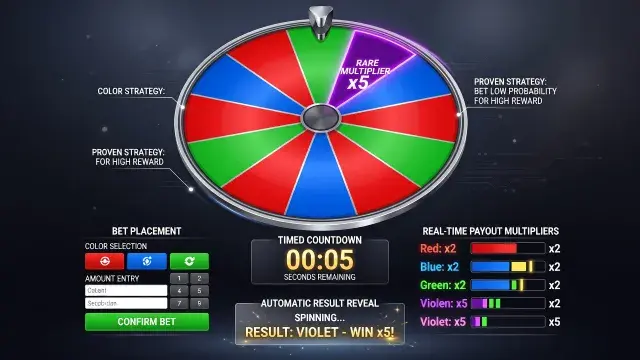
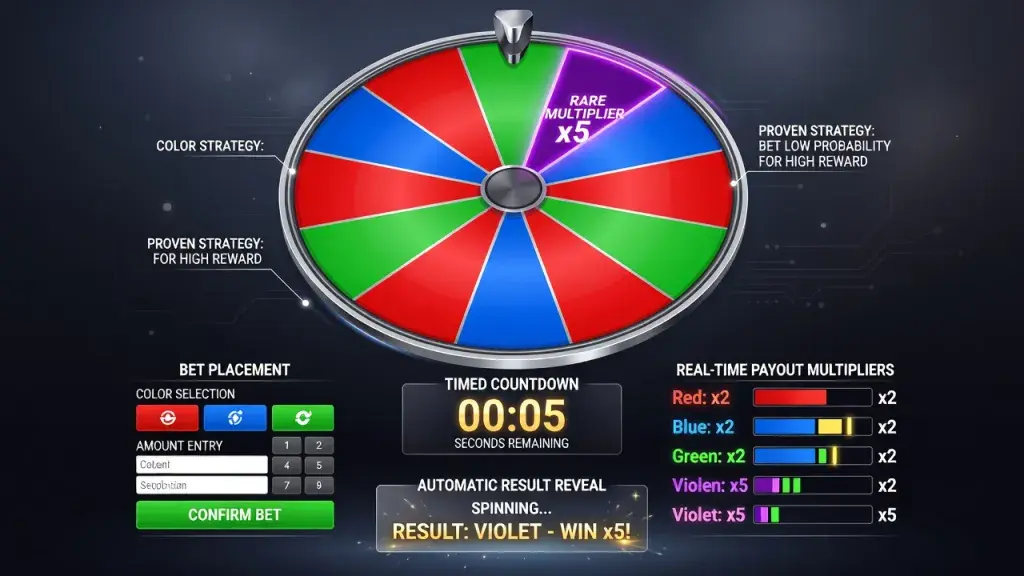
Players typically choose from three primary colors, each carrying different odds and payout multipliers. Some versions add a fourth "violet" or mixed-color option that pays out at a higher multiplier but appears less frequently. Understanding which colors combine and how often the mixed option triggers is essential before committing real money.
Payout Structure Explained
Payouts scale inversely with probability. The color that appears most often pays the least; the rarer combination pays significantly more. This isn't arbitrary - it's how the game balances risk against reward. A flat payout regardless of frequency would break the math behind the entire format.
Round Timing and Betting Windows
Each round opens a betting window lasting a fixed number of seconds, after which bets lock and the result reveals. Missing the window means missing the round entirely. Players who rush their bets in the final seconds often make impulsive choices, which is one of the quieter reasons bankrolls shrink faster than expected.
- Betting windows are strictly timed and cannot be extended
- Locked bets cannot be canceled or modified once submitted
- Results generate through a randomized system independent of previous rounds
How to Play Super Color Step by Step
Knowing the rules is one thing. Executing a clean, mistake-free round is another. This section breaks down the actual sequence of actions from login to payout.
Setting Up Your Account and Bankroll
Start with a fixed budget separate from other funds. Treat this amount as the total you're willing to risk in a single session - not a target to protect at all costs, but a boundary that keeps losses from spiraling. Players who skip this step tend to chase losses well past the point of rational decision-making.
Placing Your First Bet
Select a color, enter a bet amount, and confirm before the timer expires. The interface usually displays potential payout in real time, which helps players calculate risk before committing. First-time players should start with minimum bets to observe how quickly rounds cycle before increasing stake size.
Reading Results and Managing Payouts
Once the window closes, the result displays immediately. Winnings credit automatically; losses deduct from the visible balance. There's no ambiguity in outcome - the transparency of instant results is part of what makes the game easy to learn but also easy to play too fast without thinking.
Essential Super Color Gameplay Tips
Rules explain the mechanics. Gameplay tips explain the behavior that keeps players in control of their own decisions rather than reacting emotionally to each round's outcome.
Bankroll Management Fundamentals
Divide your total budget into session-sized portions rather than betting it all in one sitting. A common approach involves risking no more than a small percentage of the total bankroll per bet, which extends playtime and reduces the odds of a single bad streak wiping out the entire balance.
Recognizing Patterns Without Overreacting
Some players track recent results, believing a color "due" to appear will show up next. This reasoning - the gambler's fallacy - doesn't hold up mathematically, since each round is independent. Still, tracking results can help identify which betting patterns you personally handle well under pressure, which is a psychological insight worth more than a false statistical edge.
Avoiding Emotional Betting Decisions
Losses trigger the urge to bet bigger to recover quickly. That instinct is the single fastest way to burn through a bankroll. Setting a loss limit before starting a session - and actually stopping when you hit it - protects against decisions made in frustration rather than logic.
Proven Super Color Strategy Guide
Strategy in a probability-based game doesn't mean guaranteeing wins. It means structuring bets so that the odds work in your favor over a longer stretch of play, rather than betting randomly and hoping for the best.
The Flat Betting Approach
Flat betting means wagering the same amount every round regardless of previous results. This method avoids the trap of doubling down after losses, a tactic that feels intuitive but accelerates losses when a losing streak runs longer than expected.
The Percentage-Based Betting Method
Instead of fixed amounts, some players bet a consistent percentage of their current balance. This naturally reduces bet size during losing streaks and increases it during winning ones, which smooths out volatility without requiring constant manual adjustment.
Combining Colors for Balanced Risk
Rather than betting everything on one color, some players split bets across two options with different payout tiers. This reduces the size of potential wins but also reduces variance, which suits players more interested in steady, smaller returns than occasional large payouts.
How to Win in Super Color Consistently
Consistency here doesn't mean winning every round - that's not realistic in any probability-based game. It means building habits that keep your win rate and bankroll trending in a favorable direction over many sessions.
Setting Realistic Win Targets
Decide on a specific profit target before starting a session, and stop playing once you reach it. Greed extends sessions past the point of rational play, often turning a winning session into a losing one.
Knowing When to Walk Away
Both winning and losing streaks eventually end. Recognizing the signs of a shifting pattern - and having the discipline to stop rather than chase - is the single most reliable skill separating long-term winners from players who burn out quickly.
Tracking Your Performance Over Time
Keep a simple log of sessions: starting balance, ending balance, and duration. Patterns emerge over weeks that aren't visible in a single sitting, including which strategies actually produce steadier results for your specific betting style.
Frequently Asked Questions
Is Super Color based purely on luck, or does strategy actually matter?
Each round's outcome is random and independent, so no strategy changes the probability of a specific result. Strategy matters for bankroll management and betting discipline, which determine how long you stay in the game and how well you protect your winnings.
What's the biggest mistake new players make?
Increasing bet size after a loss to "win it back" quickly. This approach, often called chasing losses, accelerates bankroll depletion far faster than steady, flat betting ever would.
How much should I bet per round as a beginner?
A small, fixed percentage of your total session bankroll - often cited around one to two percent - keeps individual losses manageable while still allowing enough rounds to learn the game's rhythm.
Can I predict which color will win based on previous rounds?
No. Each round generates independently of the last, so past results carry no predictive weight for future outcomes. Believing otherwise is a common cognitive trap known as the gambler's fallacy.
How do I know when to stop playing?
Set both a win target and a loss limit before you start. When either threshold is reached, stop the session regardless of how the momentum feels in the moment.
Are higher-payout color options worth the risk?
They can be, in moderation. Rare combinations pay more precisely because they occur less often, so betting on them exclusively increases variance significantly. Mixing safer bets with occasional higher-risk ones balances potential reward against bankroll stability.