
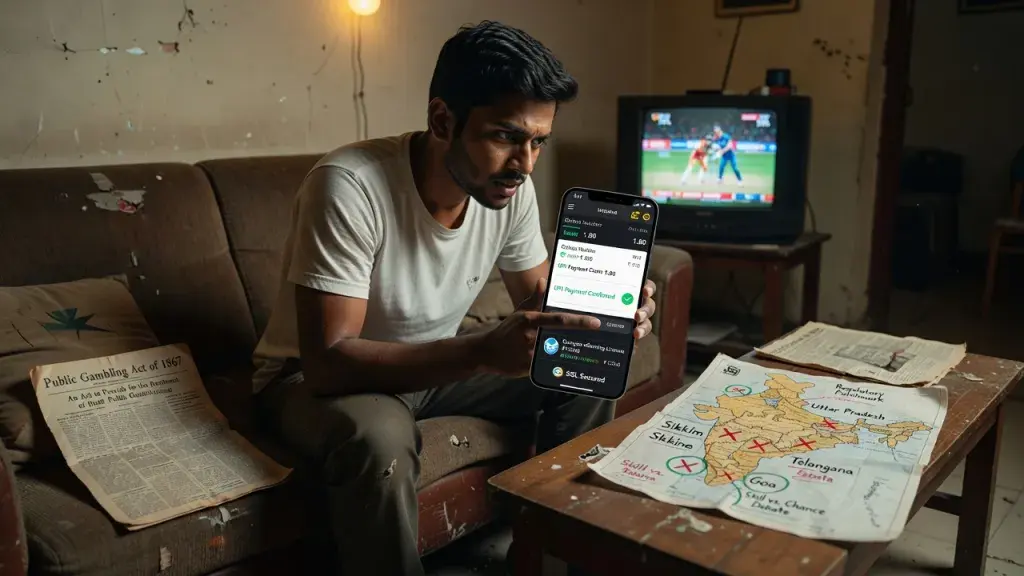
Ninety million cricket fans watched a single Indian Premier League final, yet the country's official gambling law dates back to 1867. That gap between colonial-era legislation and a population glued to smartphones explains almost everything strange about wagering in India today. Betting is technically restricted under old statutes, yet millions of Indians place bets weekly through apps hosted outside the country, using rupee-based payment systems that operate in a legal gray zone few regulators have fully addressed.
This contradiction creates real confusion for anyone trying to place their first wager responsibly. Which platforms are safe? Which states allow betting, and which don't? What happens if a payment gets flagged? Anyone researching how to make their first bet in India will quickly discover that the answer depends less on national law and more on a patchwork of state rules, offshore licensing, and banking practices that shift without much public notice.
This piece breaks down the mechanics of online betting in India, how the leading apps function, what the regulations actually say versus how they're enforced, and what a newcomer needs to know before risking a single rupee. The goal is clarity, not hype - a practical map through a market that is simultaneously massive, murky, and rapidly evolving.
Understanding the Legal Landscape of Betting in India
The Public Gambling Act of 1867 and Its Modern Relevance
India's foundational gambling law predates electricity in most of the subcontinent. The Public Gambling Act of 1867 criminalizes running or visiting a "common gaming house," language written for physical premises, not servers based in Malta or Curaçao. Courts have repeatedly ruled that games involving substantial skill - most famously rummy and, in several judgments, fantasy sports - fall outside this prohibition. Betting on sports outcomes, by contrast, is generally treated as a game of chance, which keeps it in legally uncertain territory nationwide.
State-by-State Variations in Betting Regulations in India
Gambling regulation sits with individual states under India's constitutional structure, and the result is a genuine patchwork. Sikkim and Goa permit certain licensed forms of gambling, including physical casinos and, in Sikkim's case, online skill gaming under state licenses. Most other states either explicitly ban betting or simply haven't updated their statutes to address online activity at all. This inconsistency is central to understanding betting regulations in India - a bet considered borderline legal in Goa might sit in a completely different category in Uttar Pradesh, even though both bettors are using the same app.
Why Offshore Licensing Fills the Regulatory Gap
Because domestic law offers no clear licensing path for sports betting operators targeting Indian users, nearly every major platform serving Indian bettors is licensed abroad - commonly in Curaçao, Malta, or the Isle of Man. These licenses provide operational legitimacy in the jurisdiction where the company is incorporated, but they carry no legal weight inside India. This is the mechanism that allows online betting in India to flourish commercially while remaining legally ambiguous: the operators aren't breaking Indian law because they aren't operating from Indian soil, and enforcement against individual bettors is rare and inconsistently applied.
- Sikkim: licensed online gaming permitted under state framework
- Goa and Sikkim: licensed physical casinos allowed
- Most other states: no clear online betting license structure exists
- Nagaland: regulates certain skill-based games under a specific act
How Online Betting in India Actually Works
Offshore Platforms and Rupee-Friendly Payment Rails
The average Indian bettor never interacts with a foreign bank account or foreign currency. Offshore operators build rupee-denominated interfaces, accept UPI transfers, net banking, and e-wallets, and price everything in familiar terms. This localization is deliberate - it removes friction and makes the experience indistinguishable from using a domestic financial app, even though the underlying company sits thousands of kilometers away with no Indian regulatory oversight.
The Role of VPNs and Domain Redirects
Occasional government pressure leads internet service providers to block specific betting domains. Operators respond with mirror sites, rotating domains, and app-based access that bypasses browser restrictions entirely. Some bettors still use VPNs as a precaution, though this is increasingly unnecessary given how quickly platforms restore access through alternate URLs.
Deposit and Withdrawal Mechanics Bettors Should Understand
Deposits typically clear instantly through UPI, while withdrawals can take anywhere from a few hours to several business days depending on the platform's internal verification process. Anyone new to the space should treat the first deposit as a test of the entire pipeline - checking withdrawal speed and customer support responsiveness before committing larger amounts. Detailed guidance on placing a first bet in india covers many of the practical steps involved, from account verification to confirming a market before funds are committed.
Exploring Indian Betting Apps: Features and Functionality
Core Features Every Serious App Offers
Live streaming of matches, in-play betting odds that update in real time, cash-out options before an event concludes, and multi-language support covering Hindi, Tamil, Bengali, and other regional languages have become standard rather than exceptional. Apps compete heavily on odds transparency and speed of market updates during live cricket and football matches.
Mobile-First Design and the Dominance of Cricket Markets
Indian betting apps are built mobile-first because that's how the overwhelming majority of users access them. Cricket dominates betting volume by a wide margin, particularly during the IPL season, followed by football (especially English Premier League and major international tournaments) and, increasingly, kabaddi through the Pro Kabaddi League. App interfaces reflect this hierarchy, placing cricket markets front and center regardless of the actual sporting calendar elsewhere in the world.
Security, Licensing Badges, and Trust Signals
Legitimate platforms display their offshore license number, typically from Curaçao's gaming authority, along with SSL encryption certificates and responsible gambling tools like deposit limits and self-exclusion options. Absence of any visible licensing information is a reliable warning sign, since even offshore-regulated operators are required to disclose this by their home jurisdiction.
- Live in-play betting with real-time odds movement
- Cash-out functionality before match completion
- Regional language support and localized customer service
- Multiple payment gateways including UPI, Paytm, and net banking
The Growing Popularity of Sports Betting India
Cricket's Unmatched Dominance in Betting Volume
No other market comes close to cricket's share of betting activity in the country. The IPL alone generates a surge in app downloads and betting volume every spring, and international fixtures involving the national team produce similarly sharp spikes. This concentration means most platforms design their entire user experience - promotions, odds boosts, notifications - around the cricket calendar first and everything else second.
Football, Kabaddi, and the Diversification of Markets
While cricket remains dominant, football betting has grown steadily, driven by international leagues broadcast widely across Indian television and streaming platforms. Kabaddi's rise through a professional league format has also created a genuinely homegrown betting market distinct from imported sports, giving bettors more variety than existed a decade ago.
Demographic Shifts: Who Is Actually Betting
Smartphone penetration and affordable data plans have pulled betting activity well beyond metro cities into smaller towns. Younger users, often introduced through fantasy sports platforms that operate in clearer legal territory, frequently migrate toward traditional sports betting once they're comfortable with the underlying concepts of odds and stakes.
Placing Your First Bet in India: A Practical Walkthrough
Choosing a Platform: What to Check Before Signing Up
Verify the license number displayed in the footer, read independent user reviews focused specifically on withdrawal experiences, and confirm the platform supports rupee transactions without hidden currency conversion fees. Skipping this step is the single most common mistake first-time bettors make.
Account Verification and KYC Requirements
Most reputable platforms require identity verification - a government-issued ID and sometimes a selfie match - before allowing withdrawals, even if deposits and betting are permitted immediately after signup. This is a security measure, not a red flag, and its absence on a platform should raise more concern than its presence.
Understanding Odds Formats and Reading a Betting Slip
Indian platforms typically display odds in decimal format rather than fractional or American formats. Decimal odds of 1.80, for example, mean a successful ₹100 bet returns ₹180 total, including the original stake. Understanding this calculation before betting prevents the common confusion of mistaking total payout for pure profit.
Setting a Budget and Recognizing Warning Signs
Deciding a fixed loss limit before depositing, rather than after a losing streak, is the single most effective habit separating recreational bettors from those who develop problematic patterns. Platforms offering deposit caps and cool-off periods should be used proactively, not as damage control.
Risks, Fraud, and Responsible Betting Practices
Identifying Fraudulent or Unlicensed Platforms
Warning signs include withdrawal delays with no explanation, customer support that disappears after a deposit, and bonus terms so convoluted that cashing out becomes practically impossible. Genuine operators publish transparent terms and respond to support tickets within hours, not weeks.
Data Privacy Concerns With Offshore Operators
Because these platforms operate outside Indian jurisdiction, recourse for data misuse is limited. Bettors should avoid platforms that request unnecessary personal information beyond standard KYC and should use unique passwords rather than reusing credentials from banking apps.
Recognizing and Addressing Problem Gambling
Chasing losses, borrowing money specifically to bet, and hiding betting activity from family members are established warning signs of problem gambling that apply regardless of jurisdiction. Several apps now include self-exclusion tools and links to counseling resources, though usage of these features remains voluntary and underutilized.
- Unclear or missing licensing information on the platform
- Withdrawal delays beyond stated processing times
- Bonus terms with excessive wagering requirements
- Pressure to deposit more to "unlock" withdrawals
Frequently Asked Questions
Is online betting legal in India?
There is no single national answer. Sports betting operates in a legal gray area under central law, while states individually regulate or ignore the activity, and offshore operators serve Indian users without falling under domestic licensing requirements.
Can I get in legal trouble for using a betting app?
Enforcement against individual bettors is rare in most states, though a few, like Telangana, have stricter local laws with occasional penalties. The greater practical risk is financial exposure to unregulated platforms rather than criminal prosecution.
Which payment methods work best for Indian betting apps?
UPI is generally the fastest and most reliable option for both deposits and withdrawals, followed by net banking. E-wallets can work but sometimes carry restrictions specific to gambling-related transactions imposed by the wallet provider itself.
How do I know if a betting app's odds are fair?
Compare odds for the same event across two or three established platforms; significant deviation on one app is worth investigating further. Consistent, competitive odds in line with market averages generally indicate a legitimately operated book.
Do winnings from betting get taxed in India?
Yes. Income from betting and gambling falls under a flat tax rate under Indian income tax law, and winnings above a certain threshold are typically subject to tax deduction at source by the platform itself before payout.
What's the safest way to start betting for the first time?
Start with a small deposit on a platform with a visible offshore license, complete verification before betting seriously, and test a withdrawal early to confirm the process works smoothly before committing larger sums.