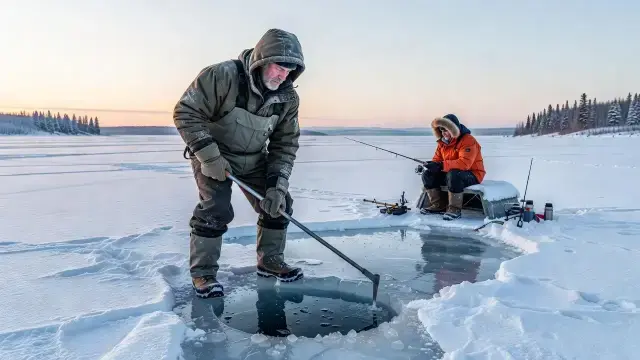
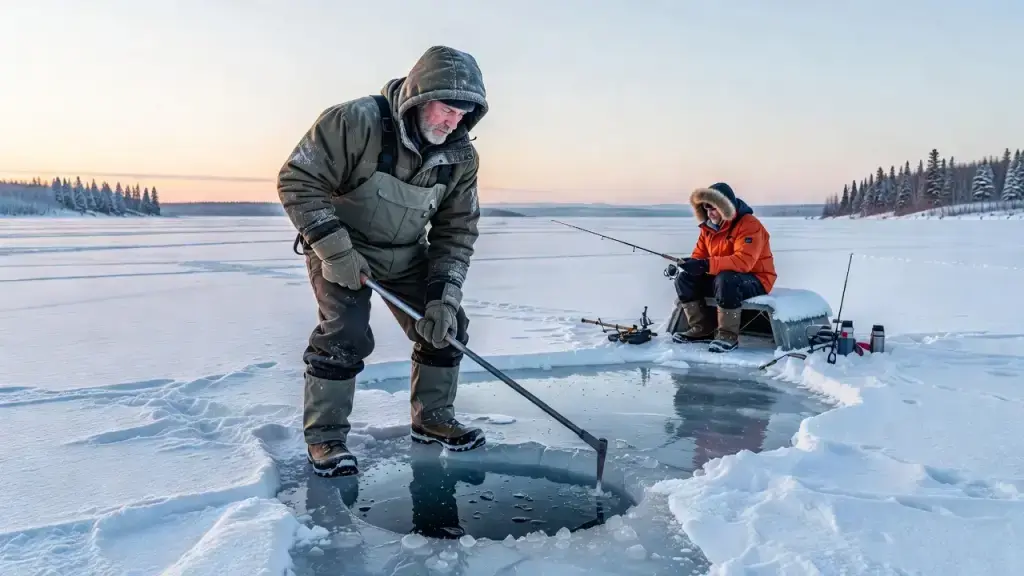
Four inches of clear, hard ice will support an average adult angler. Five inches supports a small group. Anything less than that, and you're gambling with cold water rather than fishing on top of it. That single measurement separates a productive winter outing from a genuine emergency, and it's the kind of detail that gets skipped in casual conversations about the sport but never should be.
Winter fishing rewards patience and punishes carelessness in equal measure. The fish haven't gone anywhere - they've simply slowed down, concentrated in predictable zones, and become far more sensitive to noise, light, and presentation than they were in July. Anglers who treat frozen lake fishing as a stripped-down version of summer bass fishing usually go home with nothing. Those who understand the specific demands of the season - the right ice fishing gear, a sound ice angling method, and a working knowledge of how cold-water fish actually behave - tend to fill buckets while everyone else stares at motionless tip-ups. If you want a sense of how a well-planned outing unfolds from first drill to final catch, an ice fishing strategy laid out step by step can clarify decisions that otherwise feel like guesswork. What follows is a complete breakdown of how to prepare, what to bring, and how to fish once you're standing on the ice.
Understanding Ice Conditions Before You Fish
Every good day on the ice starts before the first hole is drilled. Ice quality varies enormously depending on temperature history, snow cover, and water movement underneath, and no fishing plan matters if the surface beneath your boots can't hold your weight.
Reading Ice Thickness and Safety Margins
Clear, blue-black ice is strongest; it forms when cold temperatures freeze still water without much snow insulation. White or "snow" ice, created when slush refreezes, is roughly half as strong for the same thickness and should be treated with added caution. A spud bar or ice chisel, used every few steps on unfamiliar ice, remains the simplest way to check thickness before committing your full weight. Never trust ice near inlets, outlets, culverts, or pressure ridges - moving water underneath erodes strength unevenly, even when the surface looks uniform.
How Weather Patterns Affect Ice Quality
A hard freeze followed by stable cold produces the most reliable ice. Sudden warm spells, rain, or repeated freeze-thaw cycles weaken the structure internally, even if the surface appears intact. Wind-driven snow can also insulate ice unevenly, leaving thin spots that don't match the thickness just a few yards away.
Choosing the Right Body of Water for Beginners
Smaller, shallower lakes tend to freeze earlier and more evenly than large, deep, or current-fed lakes. For anyone new to the sport, a well-known local pond with consistent ice reports from bait shops or fishing clubs is a far safer proving ground than a sprawling reservoir.
- Four inches minimum for foot travel, six inches for snowmobiles, eight to twelve for small vehicles
- Always fish with a partner when ice conditions are uncertain
- Carry ice picks and a length of rope in an accessible pocket, not buried in a pack
Essential Ice Fishing Gear for a Successful Trip
Cold changes everything about how equipment performs. Reels freeze, hands go numb, and gear that works fine in autumn can become a liability once temperatures drop below freezing. Building a proper kit is less about buying everything available and more about matching gear to actual conditions.
Rods, Reels, and Line Selection
Ice rods are short - typically 24 to 36 inches - because anglers fish almost directly above the hole rather than casting. Reel choice matters too: many anglers prefer inline reels for jigging because they reduce line twist, a persistent problem with light monofilament in cold water. Fluorocarbon line is popular for its low visibility and reduced memory in freezing temperatures, though many still pair a fluorocarbon leader with a braided mainline for added sensitivity.
Augers, Shelters, and Cold-Weather Clothing
A sharp auger - hand, gas, or electric - is non-negotiable. Dull blades turn hole-drilling into an exhausting chore that saps energy better spent fishing. Portable shelters block wind and trap body heat, extending comfortable fishing time by hours. Layered clothing, moisture-wicking base layers, and insulated waterproof boots matter as much as any rod on the ice; hypothermia risk climbs quickly once wind and dampness combine.
Electronics and Tip-Ups
Flashers and underwater cameras have changed how anglers locate fish beneath the ice, showing depth, structure, and even real-time strikes. Tip-ups remain a proven, low-tech tool for covering multiple holes simultaneously - a flag popping up signals a bite without requiring constant attention on a single line.
- Ice auger with fresh or sharpened blades
- Insulated ice fishing suit or layered thermal clothing
- Skimmer or slotted spoon to clear slush from holes
- Flasher unit or underwater camera
- Tip-ups for passive fishing alongside active jigging
Winter Fishing Techniques That Actually Work
Fish metabolism slows dramatically in cold water, which changes both feeding windows and how aggressively they'll strike. Winter fishing techniques succeed by matching presentation speed and lure size to that sluggish behavior rather than fighting against it.
Jigging Strategies for Different Species
Panfish like crappie and bluegill respond well to small, subtle jigging motions - tiny twitches rather than aggressive pops. Walleye and perch often prefer a more rhythmic lift-and-drop cadence that mimics a dying baitfish. Pike, less affected by cold than smaller species, will still chase larger, more erratic jigging patterns.
Setting Up Tip-Ups for Passive Fishing
Tip-ups allow anglers to fish several holes at once, which matters when fish location is uncertain. Setting bait at the correct depth - often just above where fish are holding, as shown on a flasher - makes the difference between a flag that trips and one that never moves. Checking bait liveliness regularly keeps presentations attractive throughout a long, cold session.
Adjusting Depth and Presentation for Cold Water
Fish often suspend at specific depths in winter rather than hugging bottom structure the way they might in warmer months. Working a jig slowly through the entire water column on the first drop of the day helps locate that depth quickly, after which most of the productive fishing happens in a narrow band.
Effective Ice Angling Methods for Frozen Lakes
Beyond basic technique, successful frozen lake fishing depends on strategic decisions about where to fish and how to adapt as conditions change throughout the day.
Locating Fish Under the Ice
Structure still matters in winter. Drop-offs, submerged weed lines, points, and creek channels concentrate baitfish, and predators follow. A map of summer fishing spots on the same lake is often the best starting point for winter holes, since underwater structure doesn't move just because the surface has frozen.
Drilling Patterns and Hole Spacing
Rather than drilling one hole and waiting indefinitely, experienced anglers drill several holes across a suspected structure before fishing any of them - this limits noise disturbance later and allows quick relocation if the first spots prove unproductive. Spacing holes 15 to 30 feet apart across a likely drop-off covers ground efficiently without wasted effort.
Adapting Methods as Fish Activity Changes
Early morning and late afternoon typically produce the most activity, particularly under low light or overcast skies. When action slows midday, switching from aggressive jigging to a more subtle, near-motionless presentation often reawakens interest from fish that have become wary of noise and vibration.
Common Mistakes That Ruin an Ice Fishing Trip
Even well-equipped anglers undermine their own results with a handful of recurring errors that have little to do with skill and everything to do with preparation and mindset.
Overlooking Safety Preparation
Skipping ice checks, fishing alone in remote areas, or ignoring changing weather forecasts turns a fishing trip into a rescue situation. No catch is worth that risk, and experienced anglers treat safety checks as a non-negotiable part of the routine rather than an afterthought.
Using the Wrong Gear for Conditions
Summer tackle scaled down carelessly for winter often fails - line too heavy for finicky bites, lures too large for sluggish fish, or clothing inadequate for hours of stationary exposure to wind. Matching gear specifically to winter conditions, rather than improvising with leftover warm-weather equipment, prevents wasted trips.
Staying Too Long in Unproductive Spots
Confidence in a single hole, especially one that produced fish last season, keeps many anglers rooted long after activity has clearly stopped. Mobility - drilling new holes and testing different depths - consistently outperforms stubborn patience once a spot goes quiet.
Frequently Asked Questions
How thick does ice need to be before it's safe to walk on?
Four inches of clear, solid ice is the generally accepted minimum for foot travel. This should always be verified with a spud bar or auger at multiple points, since thickness can vary significantly across the same body of water, especially near inlets or drop-offs.
What's the best time of day for ice fishing?
Dawn and dusk typically produce the strongest activity because many species feed more actively during low-light periods. Overcast days can extend that productive window, sometimes keeping fish active well into the afternoon.
Do I need different bait for ice fishing compared to open-water fishing?
Smaller, more subtle baits generally outperform larger summer presentations because fish metabolism and appetite drop in cold water. Live bait such as waxworms, minnows, and maggots remains highly effective, often outperforming artificial lures when fish are sluggish.
How many holes should I drill in a single outing?
There's no fixed number, but drilling several holes across a suspected structure before settling in gives far better odds than committing to just one or two spots. Five to ten holes spread across a likely area is a reasonable starting point for most outings.
Can I use the same rod for ice fishing and regular fishing?
Standard rods are too long and often too stiff for effective ice fishing, since most bites are subtle and detected through short, direct movements just above the hole. A dedicated short ice rod, generally under three feet, improves sensitivity and control significantly.
What should I do if the ice cracks while I'm fishing?
Move calmly and slowly toward shore, distributing weight by staying low if possible, and avoid sudden movements that add stress to already compromised ice. Having ice picks readily accessible and fishing with a partner dramatically improves outcomes if a fall through the ice actually occurs.